EPC Towcester2026-08-25T15:14:17+01:00

Energy Performance Certificates (EPCs) in Towcester

EPCs You Can Trust in Towcester

If you’re selling, letting, or upgrading a property in Towcester, you’ll need a valid Energy Performance Certificate (EPC). At Bluewire Hub Ltd, we provide accurate, professional EPC assessments tailored to the homes in your local area — whether you are on the Shires, in the Poets or have an older building near the town centre.

We’re based locally and work across Towcester and the surrounding villages, supporting homeowners, landlords, and estate agents with dependable, compliant energy assessments.

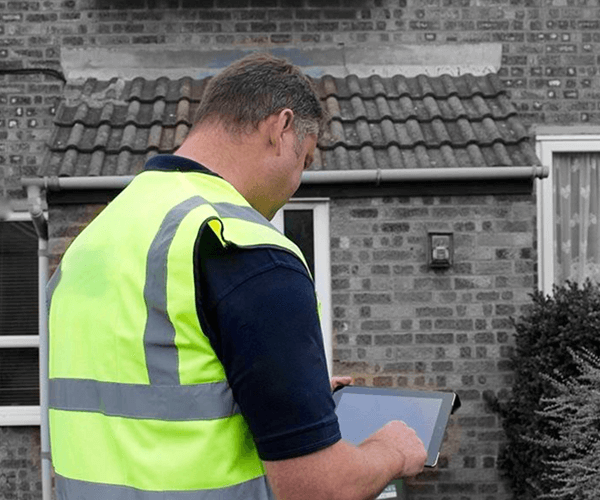
John Allen Assessor for EPC Towcester

Why Choose Bluewire Hub for Your EPC in Towcester?

Local knowledge

Our assessors have been producing EPCs since 2013 and having been brought up in the town know Towcester and the surrounding area well, from modern estates like the Shires, Sixties, Seventies and Eighties developments like Greenview Drive, Highfields and the Poets estates to character properties along the Watling Street. We understand the range of housing types and what’s needed for a compliant assessment.

Fast, efficient service

We pride ourselves on delivering efficient and reliable services. We aim to schedule your assessment at a time convenient for you, and our turnaround for issuing EPCs is quick and hassle-free. If you need an urgent assessment, we will always do our best to accommodate your request.

Professional and qualified

All EPCs are completed by certified Domestic Energy Assessors who have undergone CRB checks.

Clear, practical advice

We help you understand what your EPC means and highlight areas to improve if you’re looking to raise your rating.

Who We Work With

We provide EPCs in Towcester for:

– Homeowners preparing to sell their property
– Landlords and letting agents
– Estate agents like Jackie Oliver & Co
– Property investors

“We needed an EPC while handling the sale of a relative’s flat, we contacted John and a very prompt visit was arranged, a very simple on line payment system is in place to pay for the service, after the survey a link was sent to be able to view the certificate on line all the same day as the visit, I can not rate this service highly enough” Martin W –  Towcester.

What Happens During an EPC Visit?

  1. Book an appointment that suits you — we offer weekday availability across Towcester
  2. We assess your property — inspecting insulation, heating systems, windows, and construction type
  3. You receive your certificate — delivered electronically, usually on the same day

Areas We Cover Around Towcester

We regularly carry out EPCs in:

– Towcester
Abthorpe
Greens Norton
Silverstone
Paulerspury
Blakesley

If you’re unsure whether we cover your area, just get in touch — if you’re within South Northamptonshire, we’ll likely be able to help.

Book Your EPC in Towcester

Whether you’re letting, selling, or improving your home, we’re ready to help with a fast and professional EPC service.

Contact us today to arrange an appointment or ask any questions. 

Get your EPC Towcester Quote Today!

Simply fill out the form, remember to use the address of the property that needs the EPC.

We aim to respond to all quote requests within 24 hours (Monday to Friday).

If we need any further details, we will be in touch.

Address of the property requiring the EPC
Number of Bedrooms (Select One)
=

Frequently Asked Questions About EPCs

What is an Energy Performance Certificate (EPC) and why is it required?2025-08-19T21:13:04+01:00

An EPC shows how energy efficient a home is and is legally required when selling or letting residential property in the UK.
It rates the energy efficiency of a domestic property from A (most efficient) to G (least efficient). It includes estimated energy costs and tailored recommendations for improvement. EPCs are a legal requirement when a home is built, sold, or rented. They help prospective buyers and tenants understand running costs and inform decisions about upgrades and compliance.

Who is legally required to have an EPC for a home?2026-08-21T19:47:57+01:00

Homeowners and landlords are legally required to have a valid Energy Performance Certificate (EPC) before marketing a property for sale or let. It gives buyers and tenants clear information about the property’s energy efficiency and expected running costs.

Tenants don’t need to obtain an EPC themselves, but they’re entitled to a copy from their landlord. Marketing a property without a valid EPC can lead to financial penalties.

Not sure if your property needs one, or how to get one? Get in touch.

What has changed under RdSAP 10 (from June 2025)?2026-08-21T19:48:38+01:00

RdSAP 10 collects more detailed data for a more accurate EPC rating. Key changes include:

  • Every window is now individually measured and assessed.
  • Insulation is recorded by location, type, and thickness.
  • Heating systems and renewables are modelled more accurately.
  • Ventilation, including extractor fans and flues, is recorded in more depth.
  • Air tightness is now part of the modelling, using measured values where available.

Assessments may take slightly longer, but the result better reflects how the property actually performs.

Does the EPC include recommendations to improve energy efficiency?2026-08-21T19:49:05+01:00

Yes. The RdSAP 10 software generates improvement recommendations automatically from the data collected during your assessment, things like better insulation, a newer boiler, or renewables such as solar panels or a heat pump.

To be included, a recommendation must improve your SAP score by at least one point, and suggestions are ranked by cost-effectiveness. They’re standardised guidance based on the data gathered, not a full survey, so practical factors like planning restrictions or available space aren’t accounted for.

Why don’t EPCs usually recommend window replacements?2026-08-21T19:49:46+01:00

Because the efficiency gain rarely justifies the cost. Your assessment records window details in full, width, height, orientation, frame material, glazing type, age, and gap, but this is mainly used to calculate heat loss rather than to recommend replacement.

Replacing windows delivers a relatively small SAP score improvement for the money, so measures like better insulation, a heating system upgrade, or improved heating controls usually appear higher on the recommendations list instead.

How long does an EPC last?2025-08-19T21:12:45+01:00

How long does an EPC last?

An Energy Performance Certificate is valid for 10 years from the date of issue. There is no legal requirement to renew it within that time, unless you are selling or letting the property again—at which point a valid certificate must be in place.

However, we recommend updating your EPC if you’ve made significant energy improvements. This might include installing a new boiler, upgrading insulation, adding solar panels, or fitting an air source heat pump. A new EPC will reflect these changes and may result in a higher energy rating.

An up-to-date certificate not only helps when marketing a property but may also support compliance with future regulations or eligibility for funding schemes. Increasingly, we’re seeing mortgage lenders take EPC ratings into account, with properties that achieve higher ratings often qualifying for lower interest rates.

What is the cost of a domestic EPC?2026-08-21T19:50:20+01:00

Expect to pay between £96 and £175, depending on your property’s location, size, age, and layout. A small flat with simple construction sits at the lower end; a large detached house with multiple heating zones or renewables costs more.

The fee covers pre-visit research, the on-site data collection required under RdSAP 10, and preparing the report afterwards. Watch out for comparison sites advertising low headline prices, a large share often goes to the website rather than the assessor doing the work. Contacting a local accredited assessor directly usually gets you a fairer price and a service tailored to your property.

How do I find a reliable, qualified EPC assessor?2026-08-21T19:50:56+01:00

Look for an assessor who’s fully accredited and trained in the current RdSAP 10 procedures. You can check accreditation on the government’s EPC register.

A local assessor with a strong reputation and experience across different property types is often a good bet, construction, heating systems, and renewables all vary, and familiarity with these helps an assessor capture your home’s energy performance accurately.

Before booking, ask how long they’ve been accredited, whether they know local building styles, and whether they can offer clear pricing and timelines upfront.

Are renewable systems such as heat pumps, solar panels included?2026-08-21T19:57:53+01:00

Yes, heat pumps, solar PV, solar thermal, and battery storage are all recorded in your EPC assessment. Under RdSAP 10 they’re modelled in more detail, but your rating is based on calculated running costs, not carbon savings, so the actual impact varies by system.

  • Heat pumps can improve your rating if they replace a less efficient heating system.
  • Solar PV is modelled on system size, orientation, and overshading, and is likely to help your rating.
  • Battery storage is recorded but currently has little effect on the score.
  • Solar thermal can help by offsetting hot water demand.

Planning to install renewables? It’s worth checking with a qualified assessor first on how the improvement is likely to show up in your rating.

Can I query my EPC if something seems incorrect?2026-08-21T19:52:15+01:00

Yes. Start by contacting the assessor who carried out the survey, most concerns can be resolved with a conversation, and every assessor has a formal complaints process if you need to escalate.

Assessors keep detailed records and evidence from the inspection, so they can clarify or correct entries and reissue the report where appropriate. Bear in mind they can’t take your word alone for disputed items like floor or ceiling insulation, there needs to be documentary evidence.

If it’s still not resolved, you can escalate to the assessor’s accreditation scheme, who can investigate or require a reassessment. It’s worth acting promptly, since your EPC stays valid for 10 years regardless of any ongoing query.

How does my EPC rating impact on property value or letting potential?2026-08-21T19:52:40+01:00

A higher EPC rating makes a property more appealing to buyers and tenants, who increasingly weigh up running costs and energy efficiency. It’s also linked to lower bills and better comfort, both of which matter in a competitive market.

Some mortgage lenders now offer better terms for energy-efficient homes. For landlords it’s more than a selling point, from 2025 newly rented properties in England and Wales are expected to need at least an EPC Band C, with fines for non-compliance.

As standards tighten and buyers grow more energy-conscious, properties with poor ratings may become harder to sell or let, so improving your rating now helps future-proof the property.

Should I get an updated EPC after improvements to my property?2026-08-21T19:58:23+01:00

Worth considering, yes. Your original EPC stays valid for 10 years, but it only reflects the property’s condition at the time of assessment. Upgrades made afterwards, new insulation, a replacement boiler, solar panels, or structural changes like an extension or loft conversion, won’t show up in your current rating.

An updated EPC captures the improvement, which helps with marketability, compliance with upcoming legislation, and eligibility for grants. For landlords this matters if the changes bring the property closer to the proposed Band C requirement for new tenancies.

Looking for advice on improving your rating? Read our guide here.

What is involved in the EPC inspection process, and will it cause disruption?2026-08-21T19:54:59+01:00

The assessor needs to walk through the whole property, every room, the loft, boiler, hot water system, and meters, to collect the data required under RdSAP 10.

It’s non-invasive: no drilling, lifting floorboards, or opening up the boiler casing. They won’t carry out any work, but do need clear access to inspect walls, measure windows, check heating controls, and evidence any insulation that’s visible. If access to the loft hatch or boiler cupboard is blocked, they may have to make assumptions or arrange a second visit. Paperwork for solar PV, window installation dates, or cavity wall insulation is helpful if you have it.

Visits typically take 45 to 90 minutes. Read more about getting ready for your EPC.

What are the EPC lighting changes under RdSAP 10?2026-08-21T19:59:01+01:00

Lighting is now assessed bulb by bulb rather than by fitting. Assessors count and classify every bulb in the property, LED, CFL, or incandescent, rather than estimating from fitting types.

This lets the EPC model reflect actual lighting energy use more accurately: the more low-energy bulbs you have relative to the total, the better your lighting score. Properties with a lot of halogen or incandescent bulbs may see a slightly lower score than under the old methodology.

The change reflects how widely LEDs have been adopted in UK homes, while still accounting for any inefficient bulbs that remain, giving a more realistic picture of a property’s actual energy use.

Battery storage and EPC ratings – are systems included and do they affect the score?2026-08-21T19:53:25+01:00

Battery storage is recorded as part of the EPC assessment under RdSAP 10, but it usually has little to no effect on the actual rating. EPCs are based on modelled energy costs rather than real usage, so unless a battery is specifically set up to cut electricity demand at peak times, it won’t meaningfully lower the estimated cost used in the calculation.

Batteries paired with solar can be genuinely useful in practice, they just don’t tend to move the needle on your EPC band yet. That could change as time-of-use tariffs and smarter systems become more common.

EPC and smart meters – do they affect your energy rating?2026-08-21T19:53:53+01:00

Having a smart meter is recorded on your EPC under RdSAP 10, but it doesn’t affect your rating or band. EPCs are based on your building’s construction, insulation, and heating systems, not how you monitor your usage.

A smart meter is noted for reference, similar to solar panels or battery storage, but it has no bearing on the calculated running costs behind your score. It’s important the assessor can access your meters to record the correct type. That could change in future EPC versions as smart energy management becomes more widespread, but for now it’s recorded, not scored.

What is an EPC?2025-08-19T21:04:56+01:00

An Energy Performance Certificate (EPC) assesses a property’s energy efficiency and environmental impact, rating it from A (most efficient) to G (least efficient). EPCs provide guidance on energy-saving improvements and are required by law when a property is sold or rented.

How much does an EPC cost?2025-08-19T21:04:24+01:00

Costs vary depending on property size, type, and location. Bluewire Hub offers competitive rates, which include a full assessment and a certificate for legal compliance.

How long does an EPC assessment take?2025-08-19T21:03:59+01:00

A typical EPC assessment takes 45–90 minutes, depending on property size and complexity. The assessor inspects all rooms, heating systems, insulation, and energy-using features to produce an accurate rating.

Do I need an EPC if I am letting my property?2025-08-19T21:08:25+01:00

Yes. Landlords must provide a valid EPC to tenants before renting. Failure to comply can lead to fines. EPCs also help attract tenants by demonstrating energy efficiency.

Can I combine a floor plan with my EPC appointment?2025-08-19T21:06:28+01:00

Yes. Scheduling a floor plan alongside an EPC is efficient, reducing multiple visits and providing a comprehensive overview in one appointment.

Why did gas prices rise more than electricity in July 2026?2026-07-20T12:32:00+01:00

Ofgem’s July 2026 price cap update reflected higher wholesale gas costs, pushing gas unit rates up by around 24%, compared with roughly a 5% rise in electricity unit rates.

Does a better EPC rating actually lower my energy bill?2026-07-20T12:32:51+01:00

A better EPC rating means the modelled cost of heating and lighting the home is lower, which generally does translate into lower bills. But the rating is based on standardised assumptions about occupancy and heating patterns, not how a specific household actually lives, so it’s an indicator of a property’s efficiency rather than a guarantee of what any individual’s bill will be.

How old can my EPC be before it stops being useful?2026-07-20T12:33:28+01:00

An EPC remains legally valid for 10 years, but if your home has since had work done, or your bills feel out of step with the rating, it is worth having it reviewed rather than relying on an outdated snapshot.

Is the price cap the same as my actual bill?2026-07-20T12:34:31+01:00

No. The price cap sets the maximum unit rate and standing charge a supplier can charge on a standard variable tariff; your actual bill still depends on how much energy your home uses.

What is the fastest EPC improvement to make right now?2026-07-20T12:34:52+01:00

For most homes, topping up loft insulation and improving heating controls tend to offer the quickest, lowest cost improvement in rating and running costs, though the right first step depends on the property’s construction.

Getting Ready for Your Domestic Energy Performance Certificate Assessment

Want to know what a Domestic Energy Assessor will look for during the Energy Performance Certificate assessment?  Take a look at our handy guide “Getting ready for your Energy Performance Certificate (EPC) assessment”

You can check if your property already has a valid Energy Performance Certificate using the governments EPC website
While you’re here why not take a look at our blog posts

  • Read Now
  • Read Now
  • Read Now
  • Read Now
Go to Top